Bidirectional charging
Use your electric car as a flexible energy storage system, reduce electricity costs and support the energy transition. Thanks to bidirectional charging, your electric car becomes more than just a vehicle.
Smart, sustainable and grid-serving.
Bidirectional charging is fundamentally changing the role of charging infrastructure: it is turning from a pure energy supplier into an active part of a flexible energy system. Whether for grid stabilization, for optimizing self-consumption or for supplying buildings - modern charging infrastructure takes on central tasks in the energy transition.
Save costs
Use electricity from your car at peak times when energy prices are high.
Promoting grid stability
Surplus electricity can be fed into the public grid if required.
Using sustainable energy
PV systems or renewable sources can be integrated more efficiently.
Flexible energy storage
Your car becomes part of an intelligent energy management system.
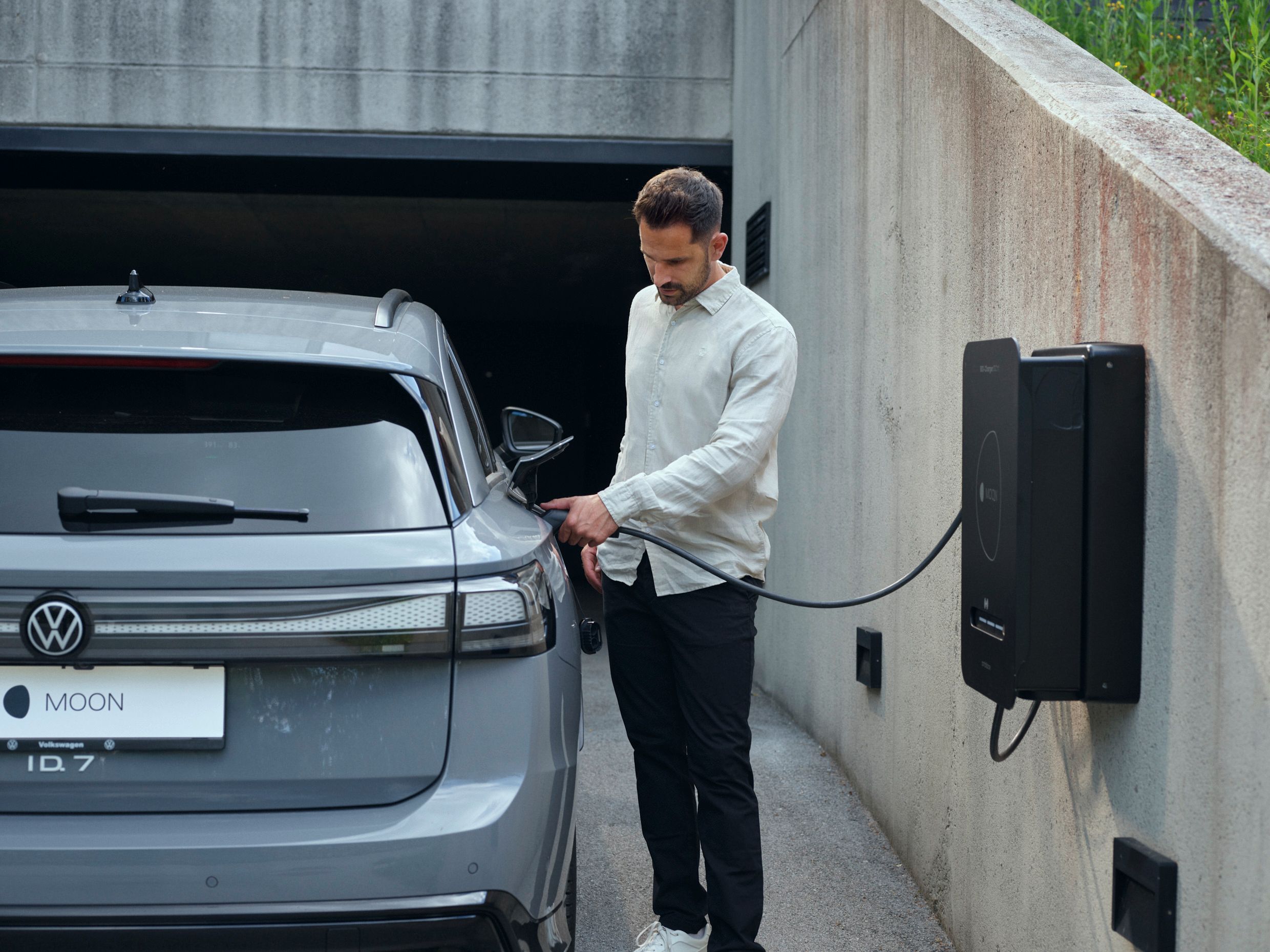
What is bidirectional charging?
Bidirectional charging makes it possible not only to charge electricity into the electric car, but also to return it to the house, building or grid when required. This turns your electric car into an intelligent energy storage system that optimizes self-consumption, reduces electricity costs and contributes to grid stability.
The following requirements must be fulfilled:
Building side
- Modbus compatible counter
- Installation for transparent billing
Vehicle side
- VW Core Brands with MEB platform
- Suitable software version
- Battery size 77 kWh or larger
Check vehicle compatibility here
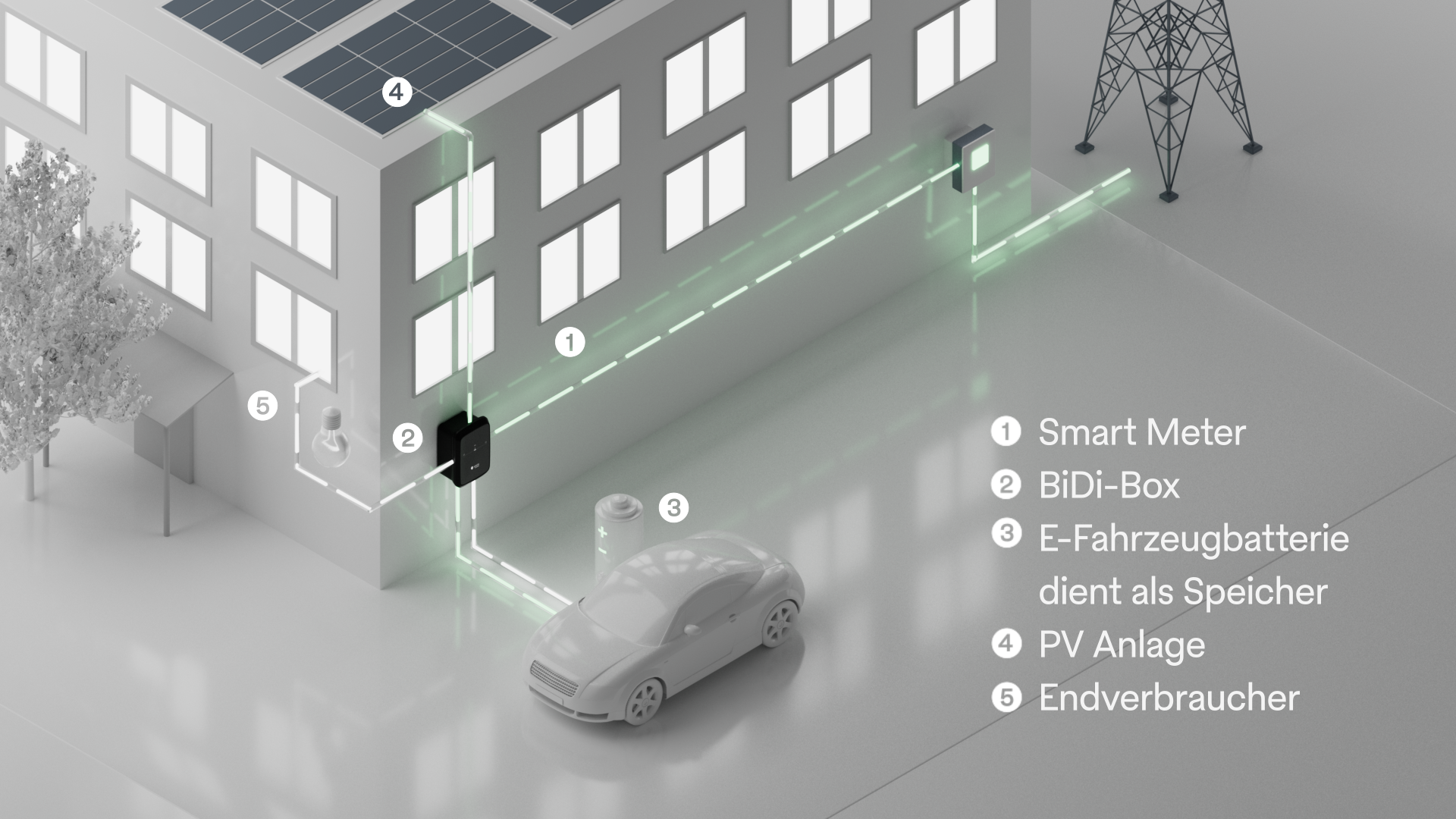
With vehicle-to-home (V2H), the electric car can be used as a flexible power source for the house. Surplus electricity from the solar system is stored in the electric car and supplies consumers in the house in the evening, when electricity is expensive. This means that cheap and self-generated solar power can be used even when the sun is not shining.
In vehicle-to-building (V2B), electric cars serve as flexible energy storage systems for buildings. This cushions load peaks and reduces energy costs. The stored energy complements solar power and increases security of supply. This makes buildings more efficient, sustainable and independent
The smart wallbox for bidirectional charging
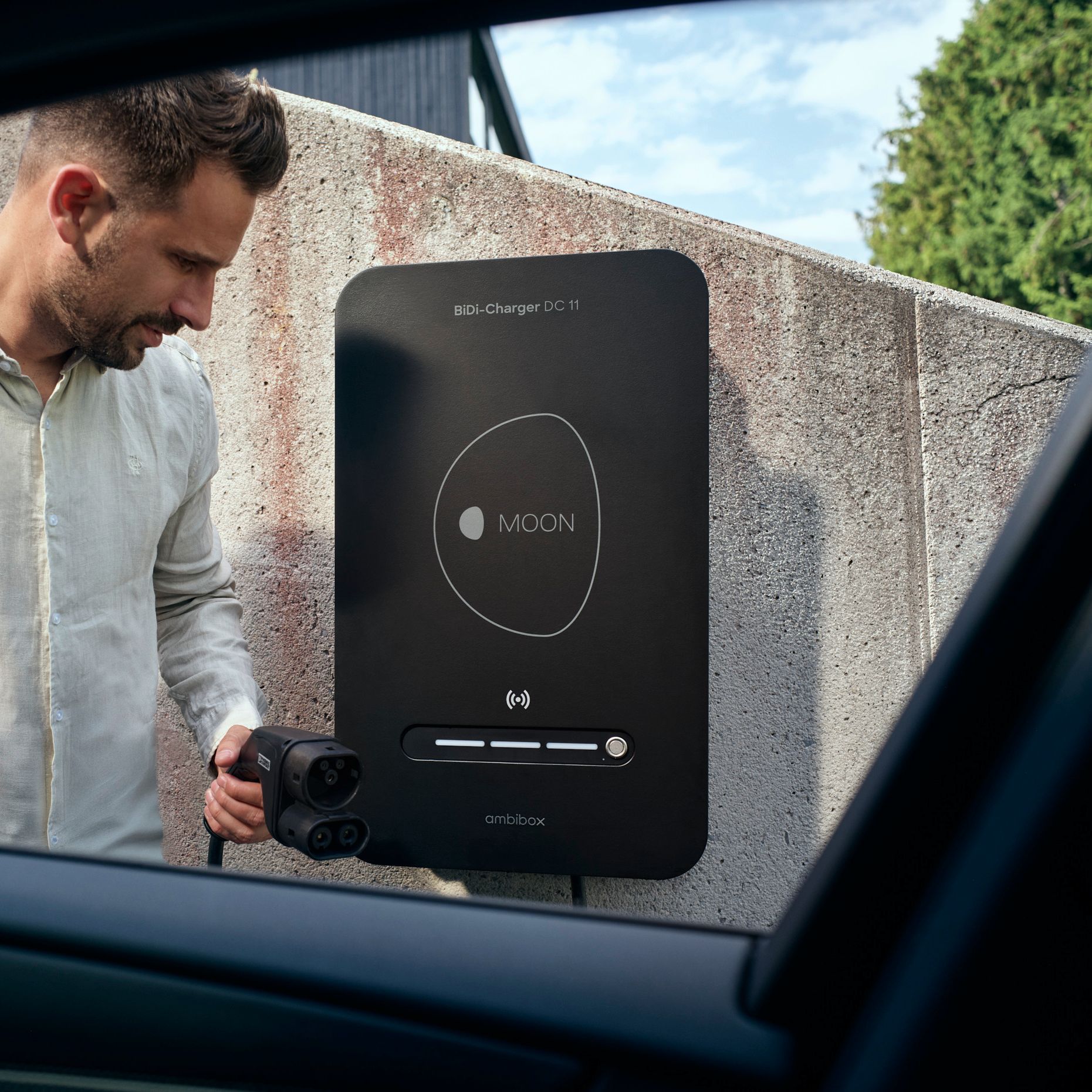
With a charging and discharging capacity of up to 11 kW, the BiDi Charger 11 DC is ideal for private or commercial locations with their own energy generation. The wallbox supports grid-friendly applications such as V2H and V2B and makes energy management simple and efficient.
FAQs
Bidirectional charging means that an electric car can not only absorb electricity from the grid, but can also return it - for example to the house (vehicle-to-home) or to the public grid (vehicle-to-grid). In this way, the vehicle becomes a flexible energy source and supports the supply or grid stability.
Bidirectional charging works via intelligent wallboxes and compatible e-vehicles. Your electricity not only flows into the car, but can also be automatically returned by control, depending on the energy demand in the house or building.
- Compatible electric vehicle with bidirectional charging function
- Bidirectional wallbox MOON BiDi Charger DC 11
- Optional: Photovoltaic system or energy management system
Only vehicles with bidirectional charging capability (vehicle-to-home / vehicle-to-building) can return power. You can find the exact compatibility list here.
The bidirectional wallbox automatically detects the energy demand and controls whether electricity is charged into the vehicle or returned to the house/grid.
Yes, bidirectional charging also works without a photovoltaic system. With a PV system, however, the advantage can be maximized, as excess solar power can be stored directly.
Bidirectional charging is only available for electric vehicles based on the MEB platform with a battery capacity of at least 77 kWh and software V.3.5 or higher. To use bidirectional charging for your vehicle, bidirectional charging must be enabled in the charging settings of your car's infotainment system (touchscreen).
Your contact for bidirectional charging
We supply intelligent charging infrastructure for bidirectional applications - from consulting to planning to turnkey installation. Future-proof, grid-friendly and perfectly tailored to your requirements.